
A U.S. strike just took out one of the Western Hemisphere’s most feared cartel bosses deep inside Venezuela — and it sends a loud message to every gang spilling chaos across our border.
Story Snapshot
- U.S. Southern Command, under President Trump, struck a Tren de Aragua compound in Venezuela and killed cartel leader Héctor “Niño Guerrero” Flores.
- Venezuela’s own government says Guerrero was “neutralized” in a joint operation in Bolívar state, confirming U.S. accounts of the mission.
- Trump framed the hit as part of a wider war on cartels that traffic drugs, guns, and violent gang members into American communities.
- The strike raises big questions about border security, past weak policies, and how far the U.S. should go to crush foreign gangs that target Americans.
Trump’s ‘swift and lethal’ strike on Tren de Aragua boss
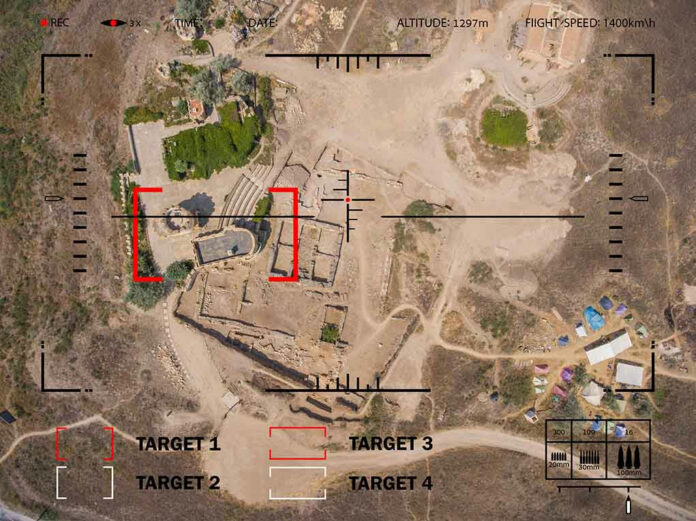
President Donald Trump announced that United States forces carried out a “swift and lethal kinetic strike” that killed Héctor Rusthenford Guerrero Flores, also known as “Niño Guerrero,” the infamous leader of the Venezuela-based Tren de Aragua gang.[2] Trump said United States Southern Command directed the mission and shared a video of the strike to show Americans what happened.[2] He stressed that this was not a symbolic gesture, but a clear warning to cartel leaders who thought they were untouchable.
Trump said the mission was “closely coordinated” with the Venezuelan government, which gave access and intelligence to reach Guerrero’s compound inside the country.[2] He described the operation as a success that “executed” the cartel boss and denied him any future safe haven. In his post, Trump also vowed that trenched-in traffickers and terrorists across the region would be hunted down. The message was aimed not only at Venezuela, but at gangs moving people and drugs through America’s broken border.
Venezuela confirms joint operation in Bolívar state
For once, Washington and Caracas are telling the same story about a high-risk mission. Reports say Venezuela’s Ministry of Communications confirmed that Guerrero Flores was killed in a “joint operation” involving United States forces and Venezuelan security services in the southeastern state of Bolívar.[1][3] A government statement described how clashes at one of the gang’s structures ended with Hector Rusthenford Guerrero, alias “Niño Guerrero,” being “neutralized.”[1] That term is the one many governments use when an armed target is killed in an operation.
A Deutsche Welle report notes that Venezuelan authorities verified Guerrero’s death and tied it directly to the coordinated strike.[1] This is important because it backs up Trump’s claim with a separate government’s statement, not just United States messaging. It also shows that Venezuela, which once let Tren de Aragua grow in its prisons and neighborhoods, now admits the gang became too dangerous to tolerate. That shift suggests pressure from Trump’s White House and a new push to treat these gangs as terrorist threats, not local crime problems.[1]
Who Guerrero was and why this matters for Americans
Guerrero was not some street-level thug. He was accused in United States courts of running drug, gun, and terror-related operations that reached well beyond Venezuela’s borders.[1] Media reports say he had been indicted in Manhattan federal court on charges tied to trafficking and violence, and that his gang had already been labeled a terrorist organization by the United States government.[1][4] Tren de Aragua has been linked to extortion, kidnappings, and brutal crimes in several countries across Latin America.[4] That makes this kill more than a distant headline.
🚨 AMERICA’S LAST 12 HOURS – June 13, 2026
❇️US military strike takes out a top Tren de Aragua cartel leader in Venezuela. Trump announces major win against international gangs.
❇️USMNT crushes Paraguay 4-1 in World Cup opener. Folarin Balogun lights it up with 2 goals.
❇️Crews… pic.twitter.com/DPv7IpVSd4— 🦅 Eagle Wings 🦅 (@CRRJA5) June 13, 2026
For many Americans, especially along the southern border, names like Tren de Aragua now show up in local police briefings, not just foreign news. These gangs exploit weak border controls, use the migrant crisis as cover, and move drugs and fighters into American cities. Conservatives have long warned that open-border policies and soft-on-crime attitudes would invite exactly this kind of threat. This strike suggests the Trump administration is treating cartel bosses more like battlefield targets than regular criminals, and many on the right will see that as overdue.
A hard line on cartels after years of weak policies
The way Trump framed the mission fits a wider pattern of his second-term approach. He has said again and again that cartel leaders and their networks will be treated as terrorists and enemies of the United States. In his Truth Social post, he declared that Tren de Aragua terrorists would have “no safe haven” in Venezuela or anywhere else under his watch.[1] That tone is a sharp break from years when Washington talked about “root causes” more than concrete strikes.
Past left-leaning governments often leaned on long talks, aid programs, and vague “regional partnerships” while cartels grew richer and bolder. Border communities watched fentanyl deaths, human trafficking, and gang violence climb while hearing speeches about global cooperation. Many conservatives saw this as globalism and weakness. This operation in Bolívar state shows a different model: locate the threat, work just enough with a foreign partner to get access, and hit the target fast. It is the kind of decisive use of power many on the right have demanded for years.[1][3]
What we still do not know — and what comes next
Even with Venezuela confirming Guerrero’s death, there are still open questions that serious citizens should track. Public reports do not yet give details like the exact date, type of weapon, or a full damage assessment from the strike.[1] Independent proof such as DNA, fingerprints, or an autopsy report has not been released to the public. Some outlets still describe Guerrero as the “alleged” leader, which shows how careful they are to avoid legal claims without full court records.[4]
History also teaches that killing a cartel boss can cut both ways. Sometimes a group falls apart. Other times a more ruthless figure steps in, and violence rises in the short term.[5] That is why conservatives should see this strike as one piece of a larger fight, not the end of the story. The real test will be whether the Trump administration and Congress keep pushing for strong borders, tough penalties for cartel allies inside the United States, and full transparency about missions carried out in our name. When the federal government uses force abroad, citizens have a right to expect both toughness and truth.
Sources:
[1] Web – US military kills Tren de Aragua head Guerrero Flores in Venezuela …
[2] Web – US kills Venezuela’s Tren de Aragua leader in military strike, Trump …
[3] Web – Trump says U.S. military strike killed leader of Tren de Aragua gang
[4] YouTube – Trump says US military strike killed leader of Tren de Aragua gang
[5] YouTube – Alleged leader of Tren de Aragua gang killed in U.S. military strike …