

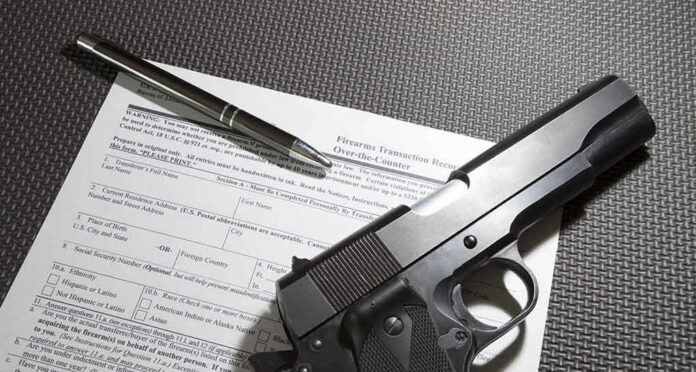
The Supreme Court declined to hear challenges to handgun age limits, leaving millions of young adults’ Second Amendment rights in limbo.
Story Snapshot
- The Court left in place mixed lower-court rulings on under-21 handgun sales.
- A sharp split now exists between federal appeals courts on age limits.
- Key petitions have sat without action since late 2025, slowing clarity.
- Recent rulings under the Bruen standard keep reshaping gun rights nationwide.
What the Supreme Court Did — And Did Not Do
The Supreme Court declined to take cases testing whether 18- to 20-year-old adults can buy handguns, keeping current age limits in place where lower courts have upheld them and leaving other regions with looser rules after wins for gun rights. Reports indicate related petitions have seen no movement since November 2025, signaling the justices are not ready to resolve the split now. This pause keeps uncertainty for families, dealers, and young adults who follow the law.
The decision not to act follows years of post-2022 litigation under the Court’s New York State Rifle and Pistol Association v. Bruen ruling. That ruling set a “text, history, and tradition” test that many judges now use to judge gun laws. Several courts have used Bruen to strike down age-based limits, while others have upheld them, producing a confused map of rights that changes by zip code. Americans deserve one rule for a core constitutional right.
The Growing Circuit Split on Age Limits
The Fifth Circuit ruled that 18- to 20-year-old adults fall within the Second Amendment’s protection and struck down the federal sales ban through licensed dealers, holding that the government failed to show a founding-era tradition for such age limits. By contrast, other appeals courts have upheld under-21 limits in purchase or carry contexts, citing history and state authority to set conditions on sales. This direct conflict between courts makes a Supreme Court ruling vital for national clarity.
Legal trackers show multiple live petitions asking the justices to decide whether laws setting a minimum age of 21 for buying or carrying guns align with the nation’s history. Two notable cases, Paris v. Second Amendment Foundation and McCoy v. Bureau of Alcohol, Tobacco, Firearms and Explosives, have been pending without a conference since late 2025. Each month of delay leaves citizens in different states under different standards for the same right, with no clear endpoint in sight.
Bruen’s Test Keeps Reshaping Second Amendment Law
Courts must now ask whether the Second Amendment’s plain text covers the person and conduct, then whether the government can show a close fit with historical tradition. This test has driven a surge of challenges to modern gun laws, including age limits. While some courts find no firm tradition supporting a 21-year cutoff, others point to past rules and practices to uphold today’s limits. The result is a patchwork of rulings that frustrates gun owners and confuses law enforcement.
In a separate area, the Supreme Court recently struck down a broad rule that blocked carry on most store property open to the public, stressing that state policies cannot erase rights through sweeping default bans. That case, though focused on property rules rather than age limits, shows the Court still polices overreach while leaving the age question unanswered for now. The message is mixed: some wins for carry, but no final word for young adult buyers.
What It Means for Families, Dealers, and Young Adults
Parents who want their 19-year-old daughter to buy a handgun for home defense face different rules based on state and circuit lines. Licensed dealers must navigate conflicting opinions while avoiding federal penalties. Law-abiding 18- to 20-year-olds who can vote, serve in the military, and sign contracts often cannot buy a handgun from a dealer, depending on where they live. This mismatch between adult duties and denied rights fuels anger among gun owners and veterans.
Clear guidance would also curb government overreach. When agencies and states lean on uncertain rules, ordinary citizens pay the price in lost rights and legal risk. A definitive ruling would settle whether the Second Amendment fully covers young adults and whether age-based limits fit our history. Until then, the fight continues in courts across the country, and the burden falls on families who just want equal protection of a fundamental right.
Sources:
firearmslaw.duke.edu, everytownlaw.org, scotusblog.com