
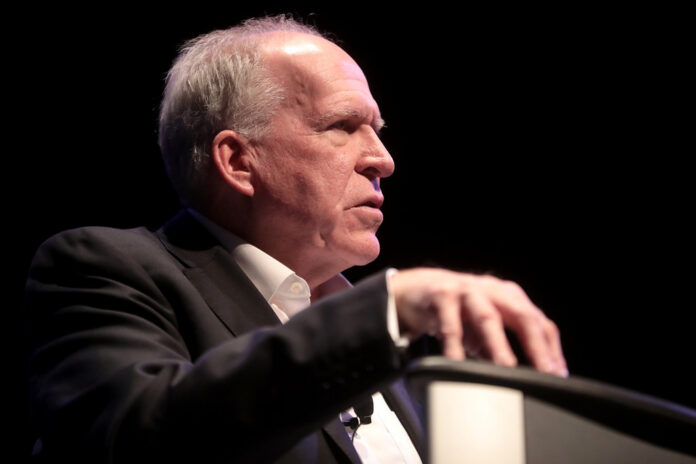
Former CIA Director John Brennan confirmed on national television that networks of operatives within federal law enforcement and intelligence agencies actively resist directives from President Trump, describing them as a “legion” of professionals working against the administration’s priorities.
Deep State Acknowledgment Surfaces on MSNBC
During a May 12, 2026 interview with MSNBC host Nicolle Wallace, Brennan openly discussed organized resistance within the Department of Justice and CIA. When Wallace questioned what mechanisms exist to slow administration policies, Brennan responded with confidence about internal opposition. He stated that professionals in law enforcement and intelligence continue refusing what he characterized as politically motivated prosecutions and activities inconsistent with their responsibilities.

Brennan emphasized reliance on these individuals to maintain their professional standards and courts to provide oversight. He warned that recent developments would cause lasting damage to federal institutions. The former intelligence chief painted this resistance as a necessary check on executive authority rather than bureaucratic insubordination.
Ongoing Criminal Investigation Targets Brennan
The admission comes while Brennan faces scrutiny in a South Florida grand jury investigation into the Russia investigation origins. Federal authorities have reportedly targeted both Brennan and former FBI Director James Comey following a prosecutorial referral from CIA Director John Ratcliffe last summer. US Attorney Jason Reding Quiñones oversees the probe examining their roles in the controversial counterintelligence operation against the Trump campaign.
Constitutional Questions on Bureaucratic Power
The public acknowledgment raises fundamental questions about the proper balance between career civil servants and elected leadership. Constitutional scholars note that while civil servants possess certain protections, openly coordinating to obstruct lawful presidential directives potentially conflicts with the executive’s constitutional authority. Brennan’s characterization of this resistance as professional duty rather than political opposition highlights ongoing tensions between permanent government bureaucracy and changing administrations. His comments suggest an organized effort rather than isolated instances of dissent.