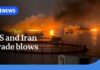

Toronto woke up to some of the **dirtiest air on Earth**, as wildfire smoke from northern Ontario turned Canada’s biggest city into a health hazard zone.
Story Snapshot
- Toronto’s air quality ranked among the worst in the world as wildfire smoke drifted in from northern Ontario.
- Environment Canada issued special warnings, saying pollution levels reached the “high” and “very high” risk range for health.
- Health officials urged people to stay indoors, cut outdoor activities, and use masks or air conditioning when possible.
- Rapid, hourly air quality rankings and repeated smoke events highlight how badly governments are struggling with wildfire and climate risks.
Smoke From Northern Ontario Pushes Toronto Into Global Worst-Air Rankings
On the morning of July 15, Toronto’s air was rated among the worst on the planet as thick wildfire smoke poured in from forests burning in northwestern Ontario. A Swiss-based air tracking company called IQAir listed Toronto at or near the top of its global pollution rankings, putting a city known for clean skylines in the same league as places famous for smog. Local reports said the sky turned hazy and orange, with the sun dimmed and visibility sharply reduced.
Environment Canada, the federal weather and air agency, confirmed that smoke from forest fires in northwestern Ontario was causing or expected to cause poor air quality and reduced visibility across much of southern Ontario, including Toronto. The agency warned that the smoke would start affecting the city Tuesday night and could last through Wednesday, meaning the bad air was not just a quick passing cloud. Similar alerts covered a wide zone from Windsor through Ottawa, showing how far the smoke reached.
Government Health Warnings: High-Risk Air, Stay Inside, Slow Down
To respond, Environment Canada issued a yellow-level air quality warning, telling residents that as smoke levels increase, health risks increase and time outdoors should be limited. Later special statements said Toronto’s Air Quality Health Index could reach seven or higher, which counts as high risk, and even push toward very high levels in some smoke waves. These alerts advised people to cut outdoor sports, events, and heavy exercise because breathing harder pulls more fine particles deep into the lungs.
Health advice was simple but serious. People were urged to keep windows and doors closed, use air conditioning if they had it, and check on neighbors who might be more at risk, like seniors, pregnant women, children, and those with heart or lung disease. For anyone who had to be outside, officials recommended a well-fitted respirator-style mask to help block the tiny particles in wildfire smoke. Toronto Public Health echoed these messages, warning that poor air could persist and that sensitive groups could feel breathing problems even at lower pollution levels.
Wildfire Smoke: What It Does to Lungs and Why Rankings Keep Spiking
Wildfire smoke is dangerous mainly because of fine particles called PM2.5, which are so small they can pass deep into the lungs and sometimes into the bloodstream. Canada’s own health guidance says there is no known safe level of exposure to some of these pollutants, meaning even short spikes can matter, especially for people with asthma or heart disease. In past smoke seasons, Ontario saw asthma-related emergency visits jump by more than 20 percent during heavy smoke days, proving these events are not just about ugly skies.
Experts also point out that smoke plumes can travel hundreds or even thousands of miles, moving from fires in western or northern Canada into big cities around the Great Lakes and the northeastern United States. That is why places like Toronto, Montreal, Detroit, and Chicago can suddenly appear on “worst air in the world” lists when wind patterns push a dense plume over them. These rankings can change hour by hour as wind shifts and smoke thickness changes, which helps explain why Toronto has moved from second-worst to ninth-worst and back again on different smoke days.
Repeat Alerts Raise Bigger Questions About Fire Policy and Public Trust
This is not the first time Toronto’s air has landed in the global bottom tier. Environment Canada notes that earlier in the same month, Toronto briefly had the second-worst air worldwide, behind Baghdad, due to smoke from northern Ontario and Prairie fires. Other reports show Toronto ranking in the top 10 for pollution on several recent occasions as Canadian wildfires became more frequent and more intense from year to year. These repeat warnings are starting to feel less like freak accidents and more like a pattern.
🚨MORE FOOTAGE TORONTO AIR QUALITY AT HIGH HEALTH RISK
Toronto is experiencing high health risk air quality today as wildfire smoke continues to blanket the city.#BreakingNews #Toronto #Canada #AirQuality #WildfireSmoke #Wildfires https://t.co/8SbpzKTptG pic.twitter.com/uOgeo2Qlhd
— Rosa News Official (@Mirha1206) July 15, 2026
Many people on both the left and the right already worry that governments are slow, divided, or captured by powerful interests, and these smoke emergencies feed that frustration. Each new “worst air” day brings the same advice to stay inside, wear a mask, and hope the wind changes, while deeper issues—like forest management, energy policy, and emergency planning—seem stuck in political fights. As Toronto’s sky turns orange yet again, the event becomes more than a local weather story; it looks like another sign that basic public health and safety are being outpaced by rising climate and wildfire risks.
Sources:
insiderpaper.com, globalnews.ca, cbc.ca, stillcoviding.ca, chch.com, theweathernetwork.com, nature.com, ontario.ca, toronto.ca, ncar.ucar.edu