
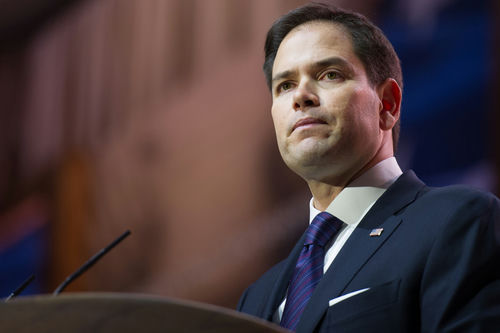
Secretary of State Marco Rubio just told Beijing that no handshake with Xi Jinping will make America blink on Taiwan.
Xi Draws a Red Line in Beijing
Chinese President Xi Jinping used his face-to-face meeting with Donald Trump to deliver a blunt message: Taiwan is the most important issue in U.S.-China relations, and any misstep could spark military conflict. According to Chinese state media, Xi framed the island as a non-negotiable core interest, warning that mismanagement would lead to clashes. The statement was deliberate, designed to test whether Trump’s engagement signaled any softening in America’s support for Taiwan’s de facto independence.
Xi’s warning comes as Beijing accelerates its military buildup around Taiwan, conducting frequent air and naval drills that blur the line between intimidation and invasion rehearsal. For decades, the Communist Party has refused to renounce the use of force to achieve reunification, treating Taiwan as unfinished business from the 1949 civil war. Xi clearly wanted Trump to understand that any perception of U.S. wavering would invite Chinese aggression. The timing mattered: summits offer Beijing leverage to frame concessions or extract commitments while the world watches.
Rubio’s Immediate Pushback
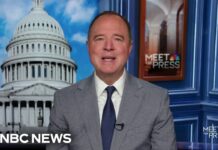
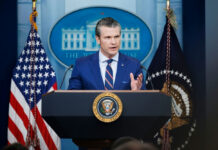
Hours after Xi’s warning circulated, Marco Rubio sat down with NBC News and shut the door on any speculation. U.S. policy toward Taiwan is unchanged, period. Rubio emphasized that Washington opposes any forced alteration of the status quo and that strategic stability requires both clarity and restraint. He made clear that the Trump administration views any coercive reunification attempt as harmful to both nations and a threat to regional order. Rubio’s language was measured but firm, designed to reassure Taipei and U.S. allies in Tokyo and Manila without handing Beijing a propaganda victory.
Rubio also acknowledged the broader context: China is ramping up its military across the board, not just in the Taiwan Strait. His comments reflected the administration’s view that the U.S.-China relationship is fundamentally competitive and requires constant vigilance to prevent miscalculation. By stressing continuity, Rubio signaled that no summit pleasantries would lead to concessions on core security commitments. The message was as much for domestic consumption as for Beijing, assuring Congress and defense hawks that Trump’s engagement diplomacy would not sacrifice American interests or abandon a democratic partner.
Strategic Ambiguity Under Pressure
For decades, the United States has maintained a delicate policy of strategic ambiguity on Taiwan: recognizing Beijing diplomatically, arming Taipei defensively, and refusing to spell out exactly what America would do if China attacked. That ambiguity deters both a Chinese invasion and a Taiwanese declaration of independence. Rubio’s reaffirmation of unchanged policy preserves this balancing act, but the exchange with Xi reveals how fragile it has become. As China’s military power grows and its rhetoric hardens, the space for ambiguity narrows. Washington must deter without provoking, reassure without committing, and signal strength without stumbling into war.
The stakes are monumental. Taiwan produces the majority of the world’s advanced semiconductors, the backbone of everything from smartphones to fighter jets. Any military conflict would devastate global supply chains, trigger financial panic, and potentially drag in Japan, South Korea, and the United States in a shooting war with a nuclear-armed China. Beyond economics, the issue is existential for America’s credibility in Asia. If Washington fails to deter Chinese aggression against Taiwan, every treaty ally from Seoul to Canberra will question the value of U.S. security guarantees. Xi knows this, which is why he keeps testing the boundaries.
What Comes Next
Rubio’s statement buys time but solves nothing. The underlying drivers of crisis, China’s military modernization, nationalist pressure on Xi to achieve reunification, Taiwan’s growing sense of distinct identity, and Washington’s commitment to a rules-based order, remain on a collision course. Both sides will continue signaling resolve while managing the risk of accidental escalation. For now, the status quo holds, but the margin for error shrinks with each military exercise, each diplomatic warning, and each summit that ends without resolution. The question is not whether Taiwan will remain a flashpoint, but whether the next test will end in words or weapons.
Sources:
Trump administration responds after Xi warns of Taiwan conflict risk